24/7 Emergency Hydrovac
Watermain breaks, spills and struck utilities. Dispatch answered 24/7 by the owner.
Learn moreVacuum clean-outs of catch basins, oil-grit separators (Stormceptor and similar units), sumps, wet wells, storm maintenance holes and silted culvert ends across Toronto and the GTA. The truck pulls out sediment, standing water and trapped oil, hauls it to a licensed facility and hands you a record. For property managers, contractors, municipalities, plumbers and anyone whose environmental approval calls for OGS maintenance records.
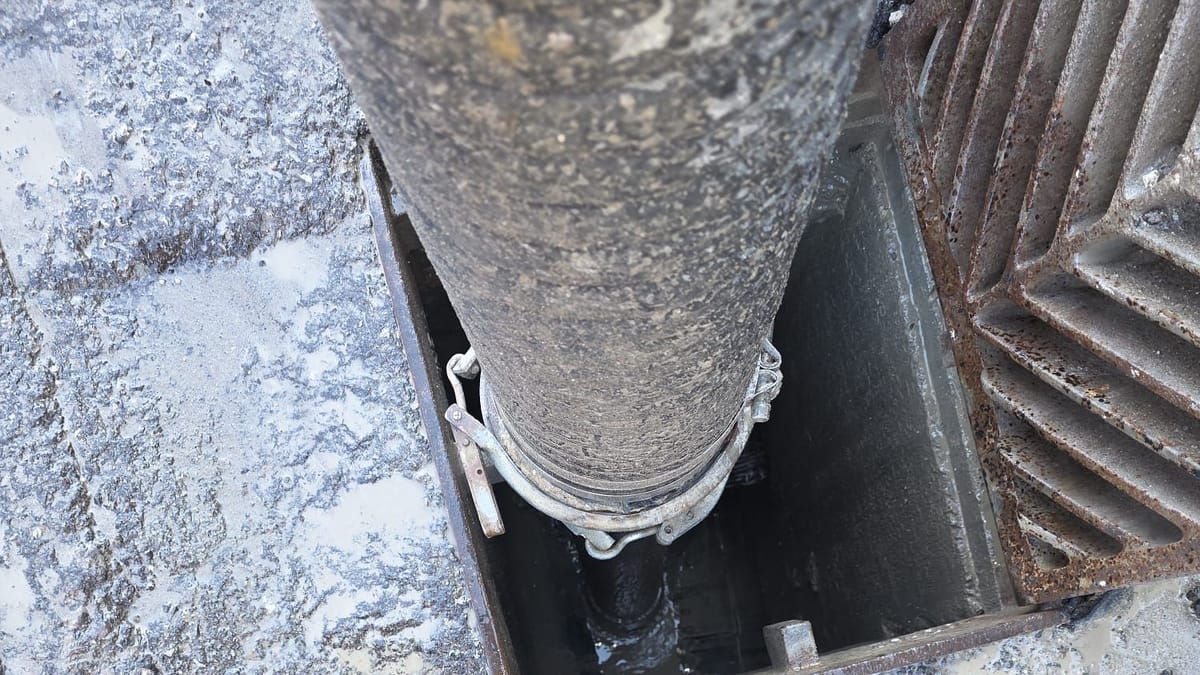 Vac hose in the chamber · sediment out
The high-flow vacuum that moves soil on a hydrovac dig pulls grit, sludge, leaves and standing water out of stormwater structures, wet or dry. The hose works from grade, so nobody enters the structure for a routine clean-out; the operator is Confined Space Entry trained for the jobs where someone must.
A catch basin half full of grit in October is a flooded lot in March. Leaves, sand and silt settle into the sump through the fall; once it ices over, the clean-out waits for spring while meltwater has nowhere to go.
The window is after leaf drop and before hard frost. Book a seasonal clean-out for the fall and we schedule it inside that window. Miss it and the truck's heated water can still open an iced-over basin or frozen culvert end in winter, but it takes longer.
From a catch basin: road grit, sand, leaves and standing water. From an oil-grit separator: the same sediment plus the hydrocarbon layer the unit traps. It all goes into the 9 m³ (12 cu yd) debris tank, and the 6,000 L of water on board rinses the walls and loosens packed sediment.
From there it goes to a licensed receiving facility, with a written spill prevention and contingency plan on the truck. Disposal is shown as its own line on the quote. We tell you before we book if the oil layer has to go out as a separate load. Nothing is left on your site.
Many GTA commercial and industrial sites carry an environmental approval or site plan condition requiring the oil-grit separator to be inspected and cleaned on a schedule, with records kept. When the consultant or municipal inspector asks, an invoice is not enough.
Every structure we clean gets a photo-and-depth record: photos before and after, sediment depth where the structure allows it, the date and the loads hauled. If your approval uses a specific inspection form, send it ahead and it goes in the file.
Catch basins sit in the middle of parking lots, behind buildings and under canopies. Remote hose reaches up to 90 m (300 ft) from the truck for structures it cannot get near. The boom reaches 12.5 m (41 ft) with the extension, and the removable deflector plate comes off under canopies and overhead lines.
Tell us where each structure is when you book and we plan the staging around your tenants and traffic. For road and boulevard basins the operator is Book 7 trained; traffic control is scoped with you when you book.
Single visits are the flooded lot, the basin that failed inspection, the culvert end silted up after a storm, or the sump that will not drain. Call for a number on the phone; for a defined count of structures, a written price the same business day.
Seasonal work is a portfolio or a municipality with a list of structures: spring and fall rounds, or fall only, with the same record every time. Pricing is hourly with a minimum charge per dispatch, plus mobilization and disposal as separate lines; no fuel surcharge. Contractors, property managers and municipalities get account pricing on a PO or approved account, with a certificate of insurance and WSIB clearance for the vendor file. Homeowners get the same up-front quote.
It depends on the site. A treed lot with heavy traffic fills a sump faster than a quiet one, and most OGS manufacturers specify a sediment depth that triggers a clean-out. Inspect spring and fall, clean before freeze-up, and check what your approval requires.
Yes. The oil layer and sediment chamber are vacuumed out through the access cover with no one entering the unit, and we record sediment depth before and after for your maintenance file.
Call the dispatch line; it is answered 24/7 by the owner, who tells you where the nearest truck is and when it can be at your lot. A flooding lot is handled as an emergency call.
Not for a clean-out from grade; nothing is excavated. If it turns into digging to expose a crushed culvert end or a broken lead, we confirm an Ontario One Call ticket first.
Watermain breaks, spills and struck utilities. Dispatch answered 24/7 by the owner.
Learn moreHeated water through frozen ground, so winter repairs do not wait for spring.
Learn moreExpose, repair, replace, raise and thaw water boxes and curb stops without damaging the service.
Learn moreTell us how many structures, where they sit and whether it is a single visit or a seasonal clean-out, and you will have a written price the same business day. Call or email to book.